National partners convene in Washington, D.C., for 11th Annual Summit.
Doylestown, Pa., July 28, 2023 – Hep B United, a national coalition established by the Hepatitis B Foundation and the Association of Asian Pacific Community Health Organizations (AAPCHO) to address the epidemic of hepatitis B, hosted its 11th annual summit in Washington, D.C., July 24-25. The summit brought together nearly 100 community leaders, advocates, clinicians, federal partners and people living with hepatitis B to discuss strategies and challenges towards eliminating hepatitis B in the U.S.
At the Summit, participants discussed innovative local and national programs to prevent, diagnose and treat hepatitis B. Discussions focused on strategies to disseminate and implement the new universal adult hepatitis B testing and vaccination recommendations, while also ensuring that we continue to work towards addressing hepatitis B and liver cancer related health disparities among disproportionately impacted communities. Summit participants identified critical needs for improving the hepatitis B care cascade in the U.S. This includes the need for point-of-care testing for hepatitis B, increased access to vaccine, capacity building and support for disseminating and publishing community-based data, and enhanced training and support for patient navigators. The Summit also featured people living with hepatitis B, to discuss the role of storytelling in increasing public awareness and combatting stigma and discrimination.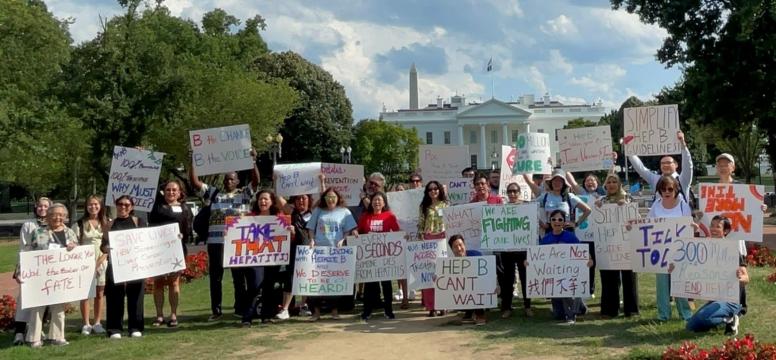
Photo by Amy Trang, PhD, MEd, Hep B United
Importantly, the Summit provided an opportunity to highlight the critical role that people with lived experience play as we strive to eliminate hepatitis B. Participants discussed a powerful new Patient Declaration published in the Journal of Viral Hepatitis by co-authors Dr. Su Wang, Director of the Center for Asian Health at Cooperman Barnabas Medical Center, and Mr. Danjuma Adda, President of the World Hepatitis Alliance.
“People living with hepatitis B deserve a voice at the table and should be included in clinical and research discussions that impact their lives,” Dr. Wang said.
Partners in the room concluded that expanded and simplified hepatitis B treatment guidelines are needed and decisionmakers must integrate patient preferences and quality of life assessment into the medical management of hepatitis B.
Aligning with the Patient Declaration, the Hepatitis B Foundation released a video to highlight some of the patients’ demands.
At the end of the two-day meeting, Hep B United partners hosted an awareness event in front of the White House, carrying signs such as “We Are Fighting 4 Our Lives” and “Hep B Can’t Wait.”
“This was an ideal way to commemorate World Hepatitis Day, and an opportunity to spotlight the needs of people living with hepatitis B, and generate action towards prioritization hepatitis B, hepatitis D and liver cancer as urgent health priorities,” stated Dr. Chari Cohen, President of the Hepatitis B Foundation.
World Hepatitis Day is observed each year on July 28. That is the birthday of Dr. Baruch Blumberg, Nobel Laureate who discovered the hepatitis B virus and developed the first vaccine.
About hepatitis B: The world’s most common serious liver infection, chronic hepatitis B, is caused by a virus that attacks and injures the liver. Almost 300 million people worldwide and 2.4 million people in the U.S. have chronic hepatitis B. Each year up to 1 million people die from hepatitis B worldwide, even though it is preventable and treatable. If untreated, hepatitis B can lead to liver cancer, which is one of the deadliest cancers worldwide.
About Hep B United: Hep B United is a nationwide coalition with partners in 37 cities, 29 states and Washington, D.C. The coalition is co-led by the Hepatitis B Foundation and the Association of Asian Pacific Community Health Organizations (AAPCHO). Hep B United is dedicated to reducing the health disparities associated with hepatitis B by building the capacity of community coalitions to increase hepatitis B education, vaccination, testing and linkage to care in a culturally and linguistically responsive manner. The coalition focuses on communities disparately impacted, including Asian Americans, Native Hawaiians and Pacific Islanders, African Immigrants and persons who inject drugs. It promotes cross-sector partnerships between community organizations, health departments and Federally Qualified Health Centers, and has been building the capacity of multi-sectoral community coalitions to address hepatitis B in a nationally coordinated manner. The Hep B United Summit is the largest convening of hepatitis B leaders from community coalitions, national nonprofit organizations, individuals and family members affected by hepatitis B, and public health agencies in the U.S.
Category: Uncategorized
New CDC Universal Screening Recommendations will save lives, Hepatitis B Foundation president says
The recommendations call for all adults ages 18 and older to be tested for hepatitis B.
New guidance released on March 9th by the U.S. Centers for Disease Control and Prevention (CDC) that recommend testing of all adults ages 18 and older will save lives, ultimately, says Hepatitis B Foundation President Chari A. Cohen, DrPH, MPH.
The CDC will publish its Universal Adult Hepatitis B Screening Recommendations in the March 10 edition of its influential Morbidity and Mortality Weekly Report (MMWR). A preview was posted on March 9 on the CDC website which can be found here.
“The Hepatitis B Foundation is grateful for the advocacy work on this issue by our Hep B United Coalition partners, the many individual advocates nationwide who have been engaged on this issue and the Congressional Hepatitis Caucus, which has been very supportive over the years of hepatitis B initiatives and decreasing HBV-related disparities,” Dr. Cohen said.
For years, the Hepatitis B Foundation has advocated that universal screening is essential to successfully addressing hepatitis B in the U.S. Our team will continue advocacy efforts to encourage the U.S. Preventive Services Task Force to align with CDC’s final recommendation.
The Hepatitis B Foundation is developing a comprehensive communications program, including a detailed white paper and a social media tool kit, to help ensure that physicians, other health care providers and public health profession nationwide learn about the new recommendations.
Previous guidelines in the U.S. were based on a person’s risk factors, which was stigmatizing, inefficient and burdensome to providers and patients. It’s important to note that about two-thirds of Americans with hepatitis B have no identified risk factors for the disease, so previous recommendations were missing a large portion of those infected.
The new recommendation calls for all adults to be screening using the hepatitis B triple panel (hepatitis B surface antigen, hep B surface antibody and hep B core antibody). The triple panel is preferred because it provides a comprehensive view of a person’s hepatitis B status and alerts the provider as to the necessary next steps, including vaccination for susceptible individuals or linkage to care for those infected.
A webinar for providers, through the Hep B United coalition, was scheduled for March 27 at 4 p.m. EDT. The webinar addressed what the recommendations will mean for providers and how implementation of universal screening and vaccination will look. The speakers included CDC representatives and Dr. Robert Gish, medical director of the Hepatitis B Foundation. Watch the video recording of the webinar here.
In the U.S., up to 2.4 million people are chronically infected, yet only 25% of those individuals know they are infected. Without diagnosis and appropriate care and treatment, people with chronic hepatitis B are at significantly increased risk of cirrhosis and liver cancer.
Hepatitis B cases in the U.S. have been rising in recent years – up 11% between 2014 and 2018 – largely due to the opioid epidemic. The disease is one of the primary causes of liver cancer, the fastest-growing cancer in the U.S., and a leading cause of cirrhosis. Asian Americans, Pacific Islanders, and African Immigrants continue to be disproportionately impacted by hepatitis B and liver cancer. From 2003-2017, it was the second most common cause of cancer deaths in Asian American and Pacific Islander males. Asians and Black Americans living with HBV have an 11-fold risk of developing primary liver cancer in comparison to white Americans.
The U.S. is on the path to eliminating viral hepatitis by 2030. Combined with universal vaccination for all adults 19-59, the new screening guidelines are a significant step towards reducing health disparities, reducing new hepatitis B infections, and working towards elimination.
About hepatitis B: The world’s most common serious liver infection, chronic hepatitis B is caused by a virus that attacks and injures the liver. Each year up to 1 million people die from hepatitis B worldwide, even though it is preventable and treatable. Hepatitis B is a “silent epidemic” because most people do not have symptoms when they are newly or chronically infected. Thus, they can unknowingly infect others and continue the spread of hepatitis B. For people who are chronically infected but don’t have any symptoms, their livers are still being silently damaged, which can develop into serious liver disease such as cirrhosis or liver cancer.
MAY 2023, HEPATITIS AWARENESS MONTH
Up to 2.4 million people in the United States are living with chronic hepatitis B and most are unaware of their infection. The month of May is designated as Hepatitis Awareness Month, with May 19th marking Hepatitis Testing Day! Organizations across the country dedicate this month to increasing awareness about viral hepatitis as well as promoting vaccination and testing.
Visit and connect with Hep B United local partners for more opportunities to get involved!
New U.S. Public Health Service Commissioned Corps Medical Standards Expand Applicant Pool to People With Chronic Hepatitis B and Human Immunodeficiency Virus
The USPHS Commissioned Corps announced the change on December 1, which was World AIDS Day. Previously, HIV and hepatitis B infection were both considered disqualifying medical conditions. This new decision reflects the latest scientific evidence and opens the door for applicants with hepatitis B and HIV to serve as uniformed Public Health Service officers.
The Hepatitis B Foundation became aware of the prohibition of applicants with hepatitis B in late 2020, when an individual with hepatitis B applied to serve but was denied due to his hepatitis B infection and contacted the Foundation. Since then, the Foundation has worked alongside partners advocating for a change in this policy. Hepatitis B Foundation leadership met with senior administration officials to raise awareness and urge them to prioritize this issue. Through legislative advocacy, the Foundation was able to get report language included in the FY 2022 House Labor-HHS Appropriations report urging the USPHS to allow officers with hepatitis B to serve in the Commissioned Corps.
Hepatitis B Foundation issued a press release. Find it here!
New Webinar: Improving Access to Hepatitis B Treatments
Please join the Hep B United Coalition on December 10, 2019 at 2:00 PM EST for a webinar to discuss access to hepatitis B treatments.

The 2020 Open Enrollment Period is here! As individuals, organizations, and patient navigators search for the best health insurance plans, join this session to learn about discriminatory practices by some health plans that may impact persons living with hepatitis B, including “adverse drug tiering” and the use of “co-pay accumulators.”
Panelists will discuss research findings of hepatitis B treatments offered by health plans, resources for prescription assistance, and provide an overview of and opportunities to get involved in federal and state legislative advocacy efforts to combat discriminatory practices by health insurers.
Register here.
Speakers:
Michaela Jackson, Public Health and Outreach Program Coordinator, Hepatitis B Foundation
Rachel Klein, Health Policy Manager, The AIDS Institute
Hepatitis B Foundation Calls for Increased Resources for Hepatitis B Prevention in Response to CDC 2017 Surveillance Data Report
The Hepatitis B Foundation is calling for increased resources to improve hepatitis B vaccination rates and educate high-risk communities, in response to newly-released viral hepatitis surveillance data from the Centers for Disease Control and Prevention (CDC). CDC released the 2017 surveillance data on September 10, showing an estimated 22,000 new acute hepatitis B cases, an increase over the previous year. Thirty-two states saw increases in reported acute hepatitis B, continuing an upward trend over the past several years, with the highest rates among non-Hispanic White adults age 40-49. These increases are likely driven by the opioid crisis as well as low vaccination rates among adults.
CDC also reported that in 2017, there was a slight increase in overall mortality related to hepatitis B. Alarmingly, mortality rates increased for Asian Americans and Pacific Islanders (AAPI), who shoulder a disproportionate burden of chronic hepatitis B infection. The 2017 death rate for AAPIs was over 5 times higher compared to other groups. Non-Hispanic Blacks also had increased mortality related to hepatitis B, possibly due to high rates of chronic hepatitis B in African immigrant communities.
Currently, only 25% of adults are protected from hepatitis B. Resources are needed to increase adult hepatitis B vaccination in the U.S., to prevent new cases of this serious liver infection.
“The newly released data confirm that while we have made strides in preventing hepatitis B, the trend of increasing acute hepatitis B cases in the U.S. continues. It is critical that we address hepatitis B as a serious consequence of the opioid crisis, by increasing activities and resources to improve vaccination, and ensuring that providers and public health professionals working in high-risk communities include hepatitis B education, testing and vaccination as part of their programming,” said Chari Cohen, DrPH, MPH, Senior Vice President at the Hepatitis B Foundation.
“As we work towards hepatitis B elimination in the U.S., we must not forget the communities impacted the most by chronic hepatitis B infection,” said Kate Moraras, MPH, Senior Program Director, Hepatitis B Foundation. “It is disheartening to see continued disparities and increased deaths due to hepatitis B among AAPIs and African communities. We must improve hepatitis B testing and care for those chronically infected. Only through diagnosis, management and treatment can we save lives.”
New Webinar Series: Local Approaches to Preventing and Eliminating Hepatitis B
Hep B United and the National Association of County and City Health Officials (NACCHO) are excited to present a 3-part webinar series on local strategies to eliminate hepatitis B. Join us for updates on the current state of hepatitis B (HBV) in the U.S. and to discuss local health department efforts and model programs to increase hepatitis B testing, vaccination, and linkage to care.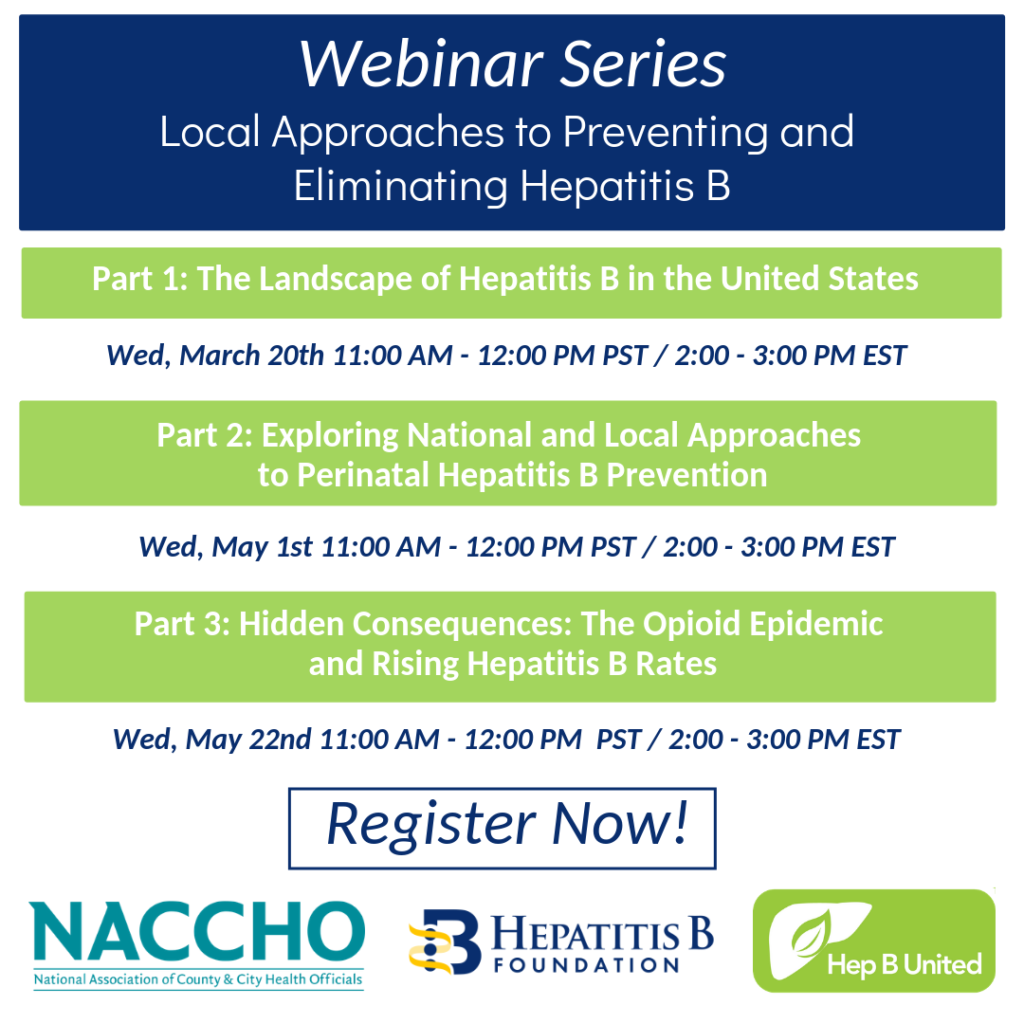
Recent data indicate that there has been an increase in the rate of new hepatitis B infections in the U.S., which many largely attribute to increasing injection drug use. To address this, Hep B United and the National Association of County and City Health Officials (NACCHO) are excited to present a three-part webinar series on local strategies to eliminate hepatitis B virus (HBV) infections.
HBV is a significant and common health burden that chronically infects up to 2.2 million people in the U.S. and approximately 257 million people globally. Up to 25% of chronically infected individuals go on to develop serious conditions such as liver damage, cirrhosis, or liver cancer, and many die as a result of complications from liver disease. Despite the availability of an effective vaccine and treatments, barriers in HBV prevention persist. Join us to discuss the current state of HBV in the U.S. and learn about local health department efforts and model programs to increase HBV testing, vaccination, and linkage to care.
We Will Be Invisible No Longer
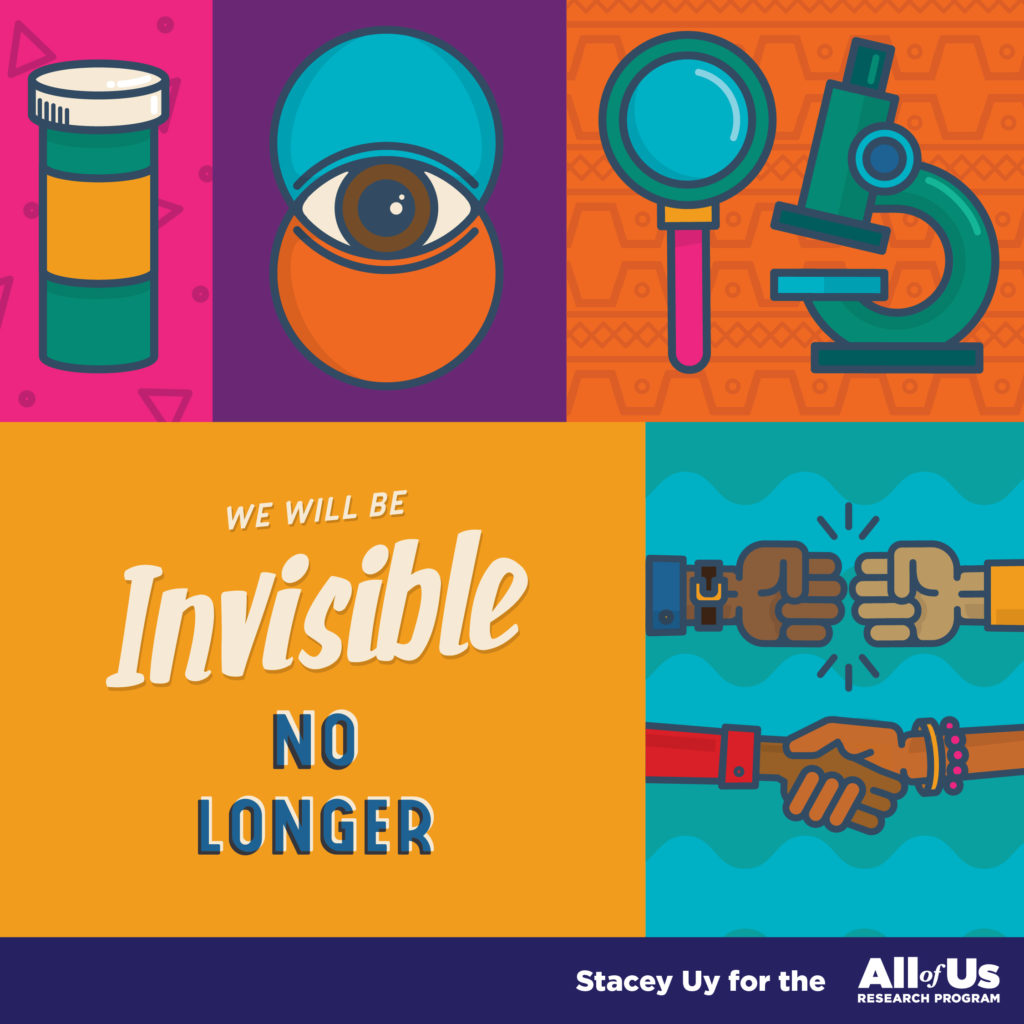 The Hepatitis B Foundation and the Hep B United coalition are excited to partner with the All of Us Research Program, a program funded by the National Institutes of Health (NIH) to advance precision medicine – health care that is tailored to each person. All of Us will enroll and engage 1 million or more people across the country, from all walks of life, to contribute to research that could improve health for generations to come.
We are partnering with All of Us to increase representation of Asian American and Pacific Islander communities in biomedical research. Diversity and inclusion in health research is critical to understanding how certain diseases or treatments affect individuals differently and helping transform health care to be more customized and effective for each person.
In the U.S., over half of the 2.2 million people living with chronic hepatitis B are Asian Americans and Pacific Islanders. Join All of Us to help researchers better understand the causes and risk factors for chronic conditions like hepatitis B and make health equity a reality.
Visit JoinAllofUs.org to learn more about the All of Us Research Program.
Additional resources:
Fact Sheet: All of Us Research Program
Infographic: All of Us Research Program
Flyer: “How do I sign up for the All of Us Research Program?”